Digital Collections / Digital Library - Munich Digitization Center

Bayerische Staatsbibliothek

Startseite Main Page


Digitale Sammlungen Digital Collections

Collection Overview

Brief Overview

Browsing Index

Search

Latest Additions

RSS Feeds


Digitalisierung Digitization


Archivierung Preservation


Projekte Projects


Service Service


Impressum Disclaimer


Diese Seite in deutscher SpracheDeutsch


Digital Collections


Currently 952,273 Titles online
[19.06.2013]


Collection OverviewCollection Overview
Browsing IndexBrowsing Index


RSS Feeds showing the latest digitised works


MDZ-News


Location based services App - Bavaria in historical maps

The new app "Bavaria in historical maps" of the Bavarian State Library, offers a new digital experience: With tablet and smartphone, you can go on a fascinating journey through Bavaria's historic maps. "Bavaria in historical maps" available from 29.04.2013 first in Apple's App Store; will be available in summer via Google Play.
[29.04.2013]

bavarikon - Kultur und Wissensschätze Bayerns

On 16.04.2013 bavarikon, the culture and ken portal of the Free State of Bavaria, was formally released in a beta version. It contains arts, culture and knowledge treasures from nearly 20 Bavarian cultural institutions. The Munich DigitiZation Center of BSB is responsible for the technical development and operation of bavarikon. www.bavarikon.de/en
[16.04.2013]

Image Search in digital mass data - An innovative project of the Bayerische Staatsbibliothek and the Fraunhofer Heinrich-Hertz-Institute goes online.

A community project of the Munich Digitization Center and the Fraunhofer Heinrich-Hertz-Institute of Berlin opens up new horizons for science and education: the similarity-based search on big digital databases. The new search on image similarity, which is a worldwide innovation in this form, counts as a model for non-text-based access to the cultural heritage. Similarity-based image-search
[26.03.2013]

Newly developed 3D-BSB-Explorer in the exhibition Magnificent Manuscripts

The 3D-BSB-Explorer is an innovative, gesture-controlled presentation system that has been developed jointly by the Munich DigitiZation Center of the Bavarian State Library and the Fraunhofer Heinrich Hertz Institute. The device serves the three-dimensional presentation of unique manuscripts and rare printed books. Currently, the 3D-BSB-Explorer is used for the exhibition Magnificent Manuscripts. Treasures of Book Illumination from 780 through 1180
[22.10.2012]

What's new

Today's additionsToday's additions to the Digital Collections.
[19.06.2013]

Turning Historical Documents into Digital Full Texts

The Munich DigitiZation Center (MDZ) of the Bavarian State Library invites you to Munich on Tuesday 11 October and Wednesday 12 October, 2011, for two conferences under the shared title “Turning Historical Documents into Digital Full Texts”. Please note: both conferences are German-speaking only! For more information about the programme and registration, please visit the event websitewebsite
[31.08.2011]

Reorganization of the computing centre

Due to reorganization of our computing centre, all services of this website will not be avaible between May 12 2011 and May 17 2011.
[09.05.2011]

Newsmore news


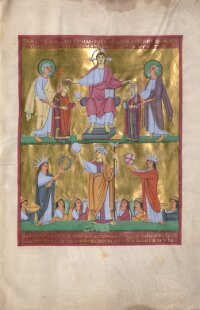
Magnificent Manuscripts - Treasures of Book Illumination from 780 through 1180

Pracht auf Pergament - Schätze der Buchmalerei von 780 bis 1180With 72 extraordinary manuscripts from the collection of the Bavarian State Library, as well as three exceptional works from the Bamberg State Library, the Kunsthalle of the Hypo Cultural Foundation presents a wide overview of the earliest and most precious examples of German book illumination.These 75 magnificent volumes represent some of the greatest cultural and artistic achievements of the Carolingian, Ottonian and Romanesque eras. Within this library’s extensive collection, the Ottonian manuscripts in particular form a unique nucleus that is unsurpassed worldwide. Owing to their extraordinary fragility, these highly valuable works can hardly ever leave the library’s vault. This exhibition of original manuscripts therefore offers a unique opportunity to discover thousand-year-old testimonies to our cultural heritage.

The oldest manuscript on display dates from the era of the last Bavarian Agilolfing duke. The Carolingian codices from the illumination centres of Salzburg, Tegernsee and Freising bear witness to the high quality of artistry in the 9th century. German illumination under the Saxon emperors from Otto the Great (912-973) to Henry II (973-1024), is one of the most glorious epochs of early occidental illumination, which played a prominent role in the arts at that time. Among the greatest achievements of this Ottonian period are the magnificent depictions of sovereigns. These establish a connection between the secular and the sacred, and underline the sanctity of imperial power.

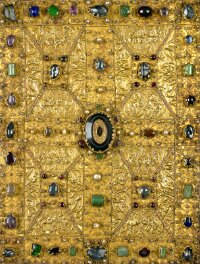
Secular and ecclesiastical rulers commissioned liturgical manuscripts from the best writing schools and illumination centres: these gospels, pericopes and sacramentaries were richly decorated with luminous colours and gold. Their ingeniously tooled luxurious bindings are encrusted with numerous precious stones, cameos and ivory reliefs, including spolia dating from the classical, Byzantine and Carolingian periods.

Four world-famous sumptuous codices from the island of Reichenau, whose monastery became the imperial scriptorium under Otto III and Henry II, are on show, including the gospels of Otto III and the pericopes of Henry II. Together with the evangeliary from Bamberg cathedral and the Bamberg Apocalypse, these books have been listed on UNESCO's ‘Memory of the World’ World Documentary Heritage register since 2003. The importance of Regensburg as a centre for the creation of sumptuous codices is demonstrated by two magnificent liturgical manuscripts, the Codex commissioned by the Abbess Uta and the Sacramentary of Henry II.

The art of Ottonian illumination outlasted the Saxon rulers until well into the Salian period. The date of the transition from Ottonian to Romanesque art cannot be precisely defined. Other selected manuscripts from the Bavarian State Library illustrate the continuity into the 11th century right up to the threshold of the Romanesque, at the same time following the development of Romanesque book illumination and its flourishing in the following century up to Emperor Frederick Barbarossa (1122-1190).

The digital service accompanying the exhibition 'Magnificent Manuscripts' offers complete digitisations featuring 56 of the 75 exhibited manuscripts, as well as selected images from three more objects.


[Collection Homepage]